Establish the foundations.
The organisation, audiences and important visitor tasks. Brand assets, approved content and existing analytics. Content ownership, accessibility and integration requirements.
Strategy & discovery ↗Service 09 / Experience
Create an accessible public presence that reflects the organisation and makes its services easy to understand and use.
The commission / an interactive walkthrough
Explore how this service moves from your starting information through a scoped build to testable acceptance and handover.
Your starting material
We start with the users, records, constraints and decisions that the commission must respect.
Share a representative example with private records removed; detailed access follows an agreed secure process.
Specific deliverables, assurance and acceptance depend on the agreed brief.
Explore our delivery process ↗Give people a clear route to what they need.
Choosing the domain for a new business or website?
Search .co.zw & .co.uk names ↗Where it fits
Public institutions, financial services, healthcare, communities and businesses.
What we can deliver
System sketch / Illustrative website journey
Organise the entry points around what visitors are trying to do, with clear navigation and useful page structure.
Illustrative service architecture. Detailed rules and responsibilities are agreed for each commission.
A useful starting point
Acceptance & handover
HandoverDesign system, editable content, responsive testing and ownership guidance.
From requirements to operation
The organisation, audiences and important visitor tasks. Brand assets, approved content and existing analytics. Content ownership, accessibility and integration requirements.
Strategy & discovery ↗Implement the agreed scope in reviewable increments. Check user journeys, integration boundaries and failure conditions against the requirements, with unresolved decisions kept visible.
Review the delivery stages ↗Navigation, enquiry and service journeys. Mobile layouts, accessibility basics and performance. Content editing, redirects and sharing metadata.
Design system, editable content, responsive testing and ownership guidance.
Working examples and archive captures show their stated maturity. The service scope is a commissioning capability, not a claim that every listed system has been deployed for a client.
A related working example
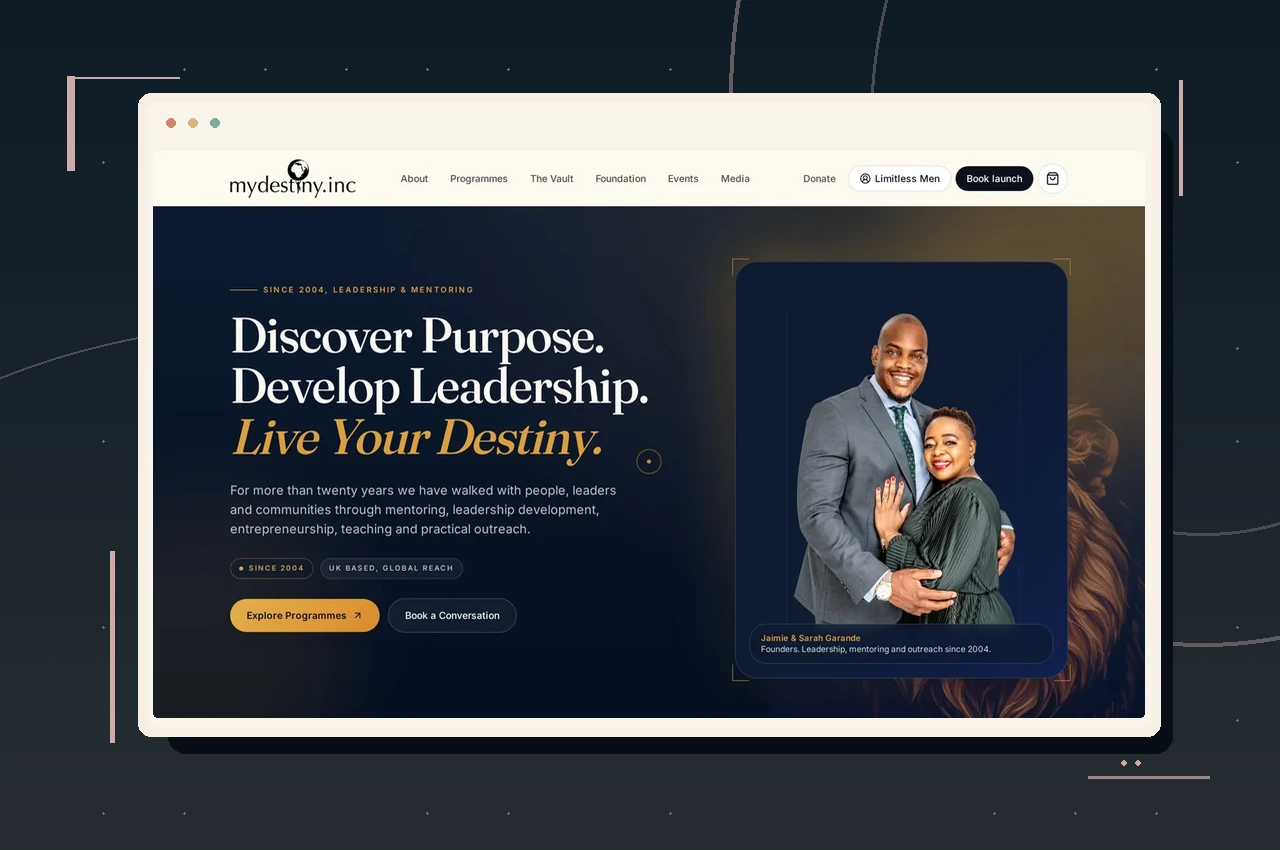
A connected organisation website with membership, events and foundation journeys.
Project case study · Archive captures
Explore the project ↗We connect observed needs to a prioritised journey and reviewable prototypes. Content ownership, accessibility, publishing responsibilities and acceptance are settled alongside the visual system, rather than after it.
Yes, where access and integration are authorised. We first establish ownership, documentation, dependencies and the boundaries of any replacement or connection. A commission does not require abandoning a system that already works.
We prioritise complete user tasks rather than an arbitrary feature count. Scope, exclusions, dependencies and acceptance scenarios are agreed before implementation, with review points for changes.
We identify data owners, information categories and permitted actions during discovery. Controls, retention, specialist assurance and any data-processing responsibilities are scoped against the actual service. A studio credential does not certify your future system.
Documentation, access ownership, training and operating responsibilities are agreed before release. Maintenance, incident coverage and further development have an explicit scope; they are not assumed to be unlimited.
Scope, assumptions, dependencies and changes recorded against the brief.
User journeys, permissions, failure conditions and operating requirements reviewed before release.
Source, documentation, training and recovery responsibilities agreed as part of handover.
Start a conversation
Bring the brief, the source material and the constraints. We will help define the scope and the right next step.